

Posterior Tibial Tendon Dysfunction Treatment in Fairfax, VA
Weakening of the main tendon supporting the arch, leading to adult-acquired flatfoot, treated with bracing, orthotics, and reconstruction when needed.
Overview
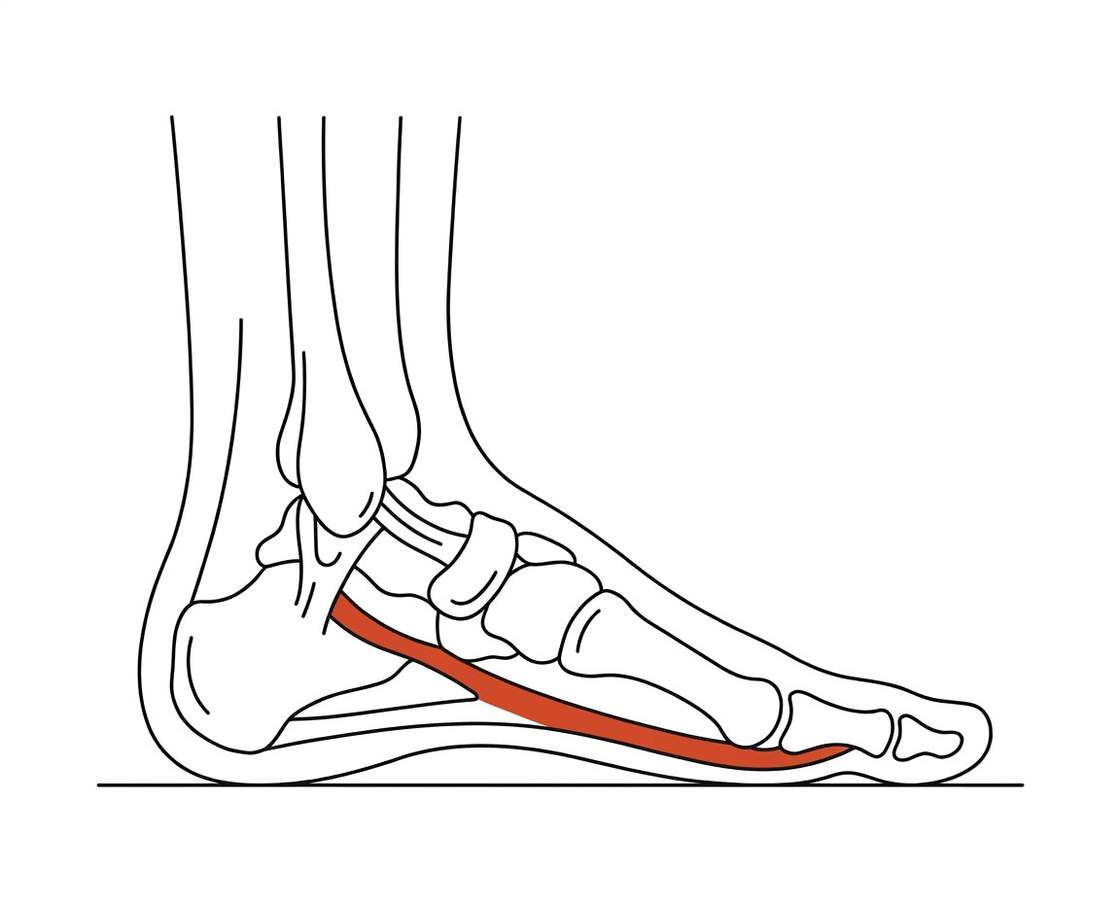
The posterior tibial tendon runs along the inside of the ankle and holds up the arch. When it becomes inflamed, stretched, or torn, it can no longer support the foot, and the arch gradually collapses. This is the most common cause of flatfoot that develops in adulthood. It progresses in stages, so early treatment matters.
Symptoms
- Pain and swelling along the inside of the ankle and arch
- An arch that is flattening over time
- The heel tilting outward and toes pointing out
- Difficulty standing on tiptoe on the affected foot
- Later, pain on the outside of the ankle as the foot shifts
Causes and risk factors
- Overuse and age-related tendon degeneration
- Pre-existing flat feet
- Higher body weight
- Diabetes and high blood pressure
- Prior steroid injections or ankle injury
Diagnosis
We assess arch shape, heel position, and the single-leg heel rise. Weight-bearing X-rays measure collapse; MRI or ultrasound shows tendon damage. The stage determines the best treatment.
Treatment
- Early stages: rest in a walking boot, followed by physical therapy to strengthen the tendon
- Support: custom orthotics or an ankle-foot brace to hold the arch
- Surgery: flatfoot reconstruction combining tendon repair or transfer, bone realignment, and in advanced cases fusion (Reconstructive Surgery & Trauma)
When to see us
If the inside of your ankle hurts and your arch looks lower than it used to, or one foot looks flatter than the other, see us early at our Fairfax office. Earlier stages are easier to treat without surgery.
Our approach
Flatfoot reconstruction falls squarely within Dr. Shyaun Rafii's fellowship training in reconstructive foot and ankle surgery, and reconstructive care is among Dr. Andrew Falco's areas of expertise. Catching PTTD early often means avoiding that surgery entirely.
Frequently asked questions
Will my arch come back on its own?
No. But early treatment can stop progression, and surgery can rebuild the arch if needed.
Can I avoid flatfoot surgery?
Many patients in early stages do well with bracing, orthotics, and rehab. Surgery is considered when the deformity progresses or pain persists.
How long is recovery from flatfoot reconstruction?
Typically six to eight weeks without weight, then gradual return to walking. Full recovery takes about a year.