

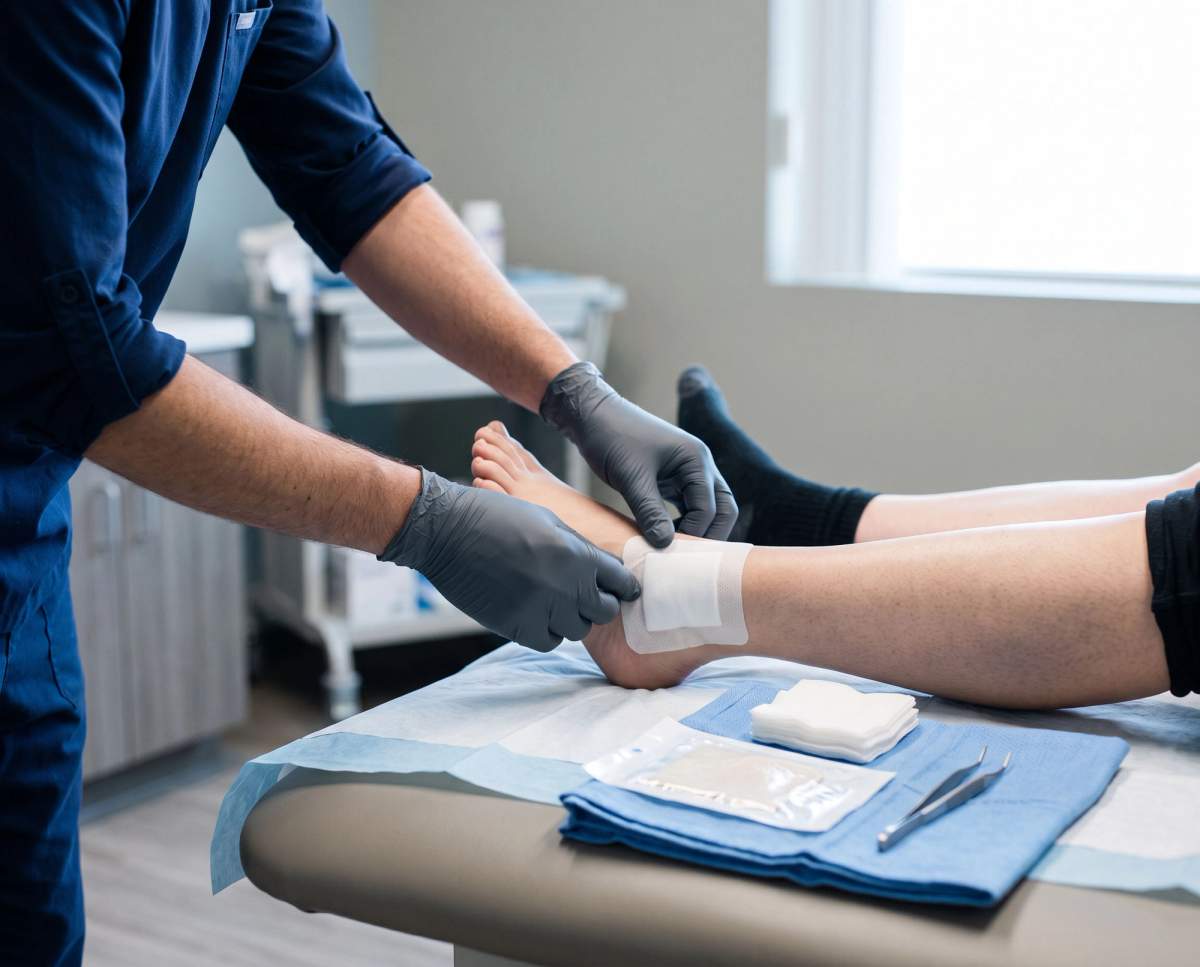
Advanced Wound Care in Fairfax, VA
Specialized assessment, dressing protocols, bioengineered tissue substitutes, and advanced healing modalities for acute and chronic non-healing wounds of the foot and lower extremity.
A wound on the foot that hasn't started healing within 24 to 48 hours needs more than a fresh bandage. Pressure, circulation, infection, and footwear all decide whether it closes, and each one has to be addressed for healing to stick.
Limb preservation is a core focus for both of our physicians, who trained side by side at MedStar Georgetown University Hospital. They find out why a wound is stalled, then build a plan that targets that cause, using advanced dressings and tissue substitutes when standard care isn't enough. Wound visits are at our Fairfax office, and for patients who can't travel we offer home visits across Fairfax, Chantilly, Centreville, Alexandria, and Loudoun County.
Who it's for
- Diabetic foot ulcers
- Pressure ulcers on the heel, toes, or bony prominences
- Venous and arterial ulcers of the lower leg and foot
- Surgical wounds that have opened or are slow to heal
- Traumatic wounds, blisters, and burns that aren't closing
- Wounds with signs of infection, including suspected bone infection
What to expect
- Full assessment. We measure and photograph the wound, check circulation and sensation, and look for infection. X-rays, cultures, or vascular studies are ordered when needed.
- Debridement. Removing dead and unhealthy tissue is often the single biggest step toward healing. Most debridement can be done in the office.
- Offloading. We take pressure off the wound with a surgical shoe, walking boot, felt padding, or total contact cast.
- Targeted dressings. Each dressing is chosen for what the wound needs right now: moisture balance, infection control, or protecting new tissue.
- Advanced therapies. If a wound isn't shrinking on schedule, we add bioengineered skin substitutes or other advanced modalities.
- Follow-up and prevention. We see you at regular intervals and adjust the plan. Once healed, we focus on keeping the wound from coming back.
Treatment options
- Sharp and enzymatic debridement
- Advanced dressings (antimicrobial, alginate, foam, collagen)
- Bioengineered and cellular tissue substitutes
- Negative pressure wound therapy
- Total contact casting and custom offloading
- Coordination with vascular surgery, infectious disease, and primary care
- Surgical correction of deformities that cause recurring wounds
Your physicians
Dr. Shyaun Rafii and Dr. Andrew Falco trained at the MedStar Georgetown University Hospital Limb Salvage Program, working collaboratively with plastic surgeons and vascular surgeons. We continue to use a team approach to heal simple and complex wounds.
Frequently asked questions
When should I see a specialist for a wound?
Don't wait if a wound or cut hasn't started healing within 24–48 hours, especially if you live with diabetes or circulation issues. Contact us right away if you notice warning signs like spreading redness, drainage, unpleasant odor, or fever.
How often will I need appointments?
Most patients are seen weekly or every other week during active treatment. The schedule depends on the wound and how quickly it responds.
What is a skin substitute?
It's a thin sheet of bioengineered or donor-derived tissue placed on the wound. It gives the body a scaffold to rebuild new tissue when a wound has stopped healing on its own.
Is wound care covered by insurance?
Most wound care services are covered by Medicare and commercial plans. Some advanced products require prior authorization, which our team handles. See our insurance page or call us with questions.
Can you see me at home?
For patients who have trouble getting to the office, wound visits may be available through our concierge home visit service.