

Diabetic Foot Care & Limb Preservation in Fairfax, VA
Preventative diabetic foot care, wound management, and limb preservation strategies.
Diabetes changes how your feet feel, heal, and fight infection. Nerve damage can hide a blister or a pebble in your shoe. Reduced circulation can turn a small cut into a wound that won't close. Most diabetes-related amputations start with a foot ulcer, and many are preventable with regular care.
Our goal is simple: keep you on your feet. We combine routine screening, early treatment, and advanced surgical options to protect your limbs at every stage, from your first diabetic foot exam to complex wound and reconstructive care. Our Fairfax office coordinates with your primary care doctor, endocrinologist, and vascular surgeon across Northern Virginia.
Who it's for
- Anyone with type 1 or type 2 diabetes, for an annual foot exam
- Patients with neuropathy (numbness, tingling, or burning)
- Patients with poor circulation or peripheral artery disease
- Current or past diabetic foot ulcers
- Charcot foot or foot deformity caused by diabetes
- Patients with a prior amputation who want to protect the remaining limb
What to expect
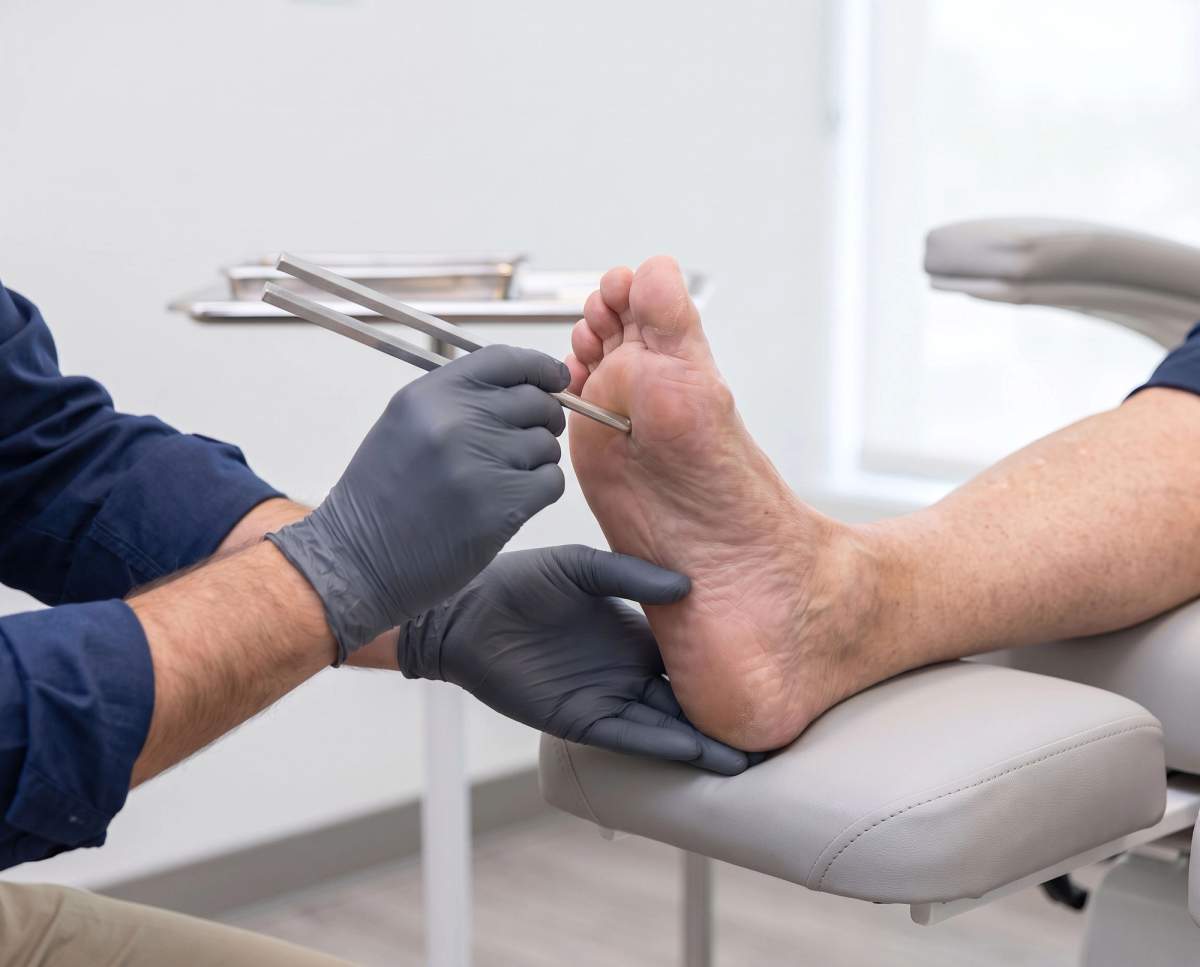
- Risk assessment. We test sensation, check pulses and circulation, and inspect skin, nails, and foot structure.
- Risk category. Based on findings, we tell you your risk level and how often you should be seen.
- Preventive care. Routine nail and callus care, footwear guidance, and diabetic shoes or inserts when appropriate.
- Early treatment. Blisters, calluses, and small wounds are treated before they become ulcers.
- Advanced care when needed. Wound care, infection management, and limb-saving surgery are coordinated with your primary care doctor, endocrinologist, and vascular surgeon.
Treatment options
- Annual and high-risk diabetic foot exams
- Routine nail, corn, and callus care
- Therapeutic diabetic shoes and custom inserts
- Offloading boots and total contact casting
- Advanced wound care and skin substitutes
- Treatment of foot infections, including bone infection
- Charcot foot management and reconstruction
- Surgery to correct deformities that cause recurring ulcers
Daily foot care tips
- Check both feet every day, including between your toes. Use a mirror or ask for help.
- Never walk barefoot, even at home.
- Check inside your shoes before putting them on.
- Keep skin moisturized, but not between your toes.
- Call us right away for any new wound, swelling, redness, or color change.
Your physicians
Dr. Shyaun Rafii gained extensive experience in diabetic limb preservation during residency at MedStar Georgetown University Hospital, and Dr. Andrew Falco's training there also made limb preservation one of his areas of expertise. Together they cover the full spectrum of diabetic foot care, from routine screening to limb-saving reconstruction.
Frequently asked questions
How often should someone with diabetes see a podiatrist?
At least once a year. If you have neuropathy, poor circulation, or a history of ulcers, we'll likely recommend visits every one to three months.
Does Medicare cover diabetic foot care?
Medicare covers foot exams and some routine care for patients with diabetic nerve damage, plus therapeutic shoes for those who qualify.
What is Charcot foot?
It's a condition in which weakened bones in a numb foot fracture and collapse, often without much pain. A warm, swollen, red foot in someone with neuropathy should be checked the same day.
Can an amputation be avoided once I have an ulcer?
In many cases, yes. Early, aggressive treatment of ulcers and infection is the best way to save a limb. Don't wait to be seen.