

Bunion Treatment in Fairfax, VA
A misalignment at the base of the big toe that forms a bump and worsens over time, managed with footwear changes and padding, and corrected with minimally invasive surgery when it limits you.
Overview
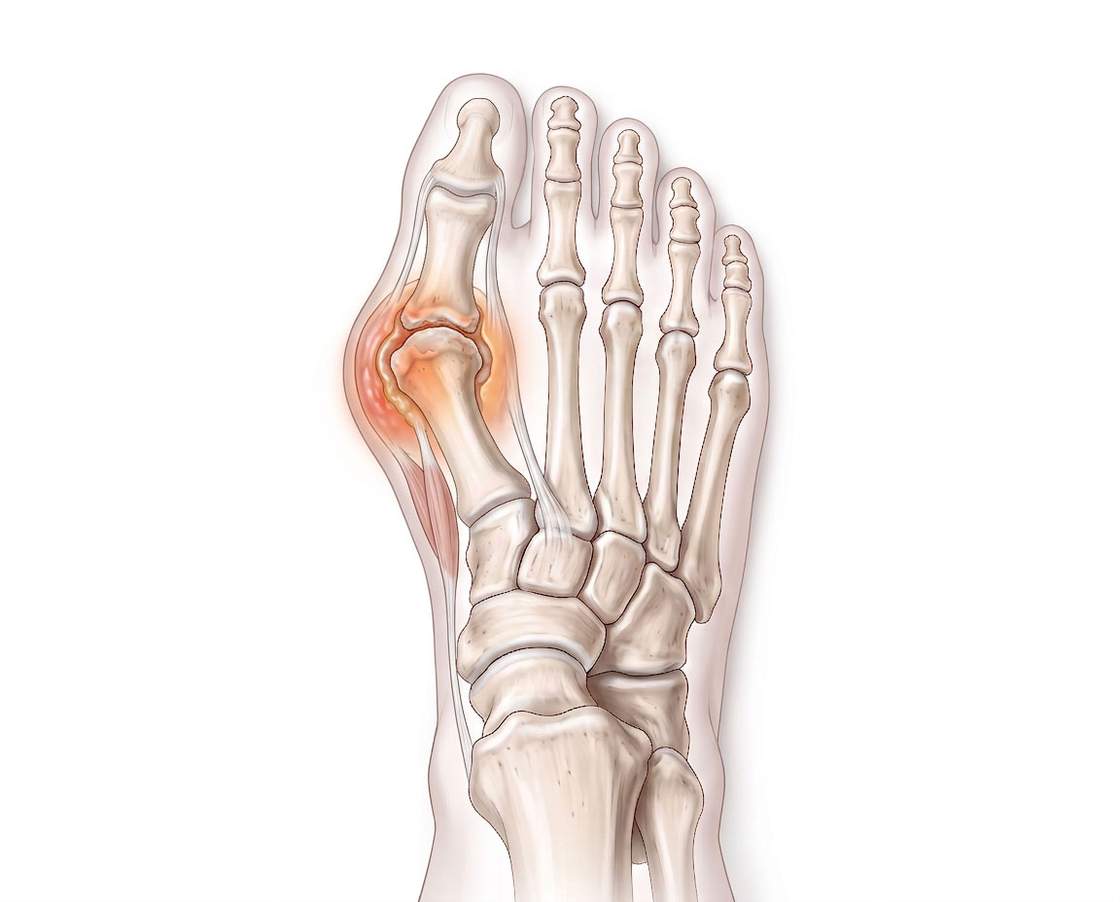
A bunion is not just a bump on the side of the foot. It is a shift in the alignment of the first metatarsal bone, which lets the big toe drift toward the second toe and pushes the joint outward. The bump is the joint itself, sitting where it should not. Bunions usually progress slowly over years, and once the bones have shifted, no shoe or splint moves them back.
Symptoms
- A visible bump at the base of the big toe
- Pain or burning over the bump, especially in closed shoes
- Redness, swelling, or a callus over the joint
- The big toe angling toward, or under, the second toe
- Stiffness or limited motion in the big toe joint
- Pain under the ball of the foot as weight shifts to the smaller toes
Causes and risk factors
- Inherited foot structure, the most common factor
- Flat feet or a loose, flexible foot type
- Narrow, tight, or high-heeled shoes, which accelerate a bunion that is already forming
- Inflammatory arthritis, such as rheumatoid arthritis
- Prior injury to the foot
Diagnosis
We examine the foot standing and seated, check the motion of the big toe joint, and look for related problems such as hammertoes or calluses. Weight-bearing X-rays measure the angle of the deformity and the condition of the joint, which is what guides the treatment plan.
Treatment
- Conservative: wider shoes with a roomy toe box, bunion pads, toe spacers, and activity changes
- Orthotics: custom orthotics to control the foot mechanics that drive the deformity
- Injections: corticosteroid injections for painful flare-ups when the big toe joint has become arthritic
- Surgery: minimally invasive bunion correction through small incisions, realigning the bone and fixing it with screws
- Severe or arthritic bunions: traditional or reconstructive techniques, including fusion, when MIS is not the right fit
Conservative care relieves symptoms and slows progression, but it does not correct the alignment. Surgery is the only treatment that does.
When to see us
Book a visit at our Fairfax office if a bunion hurts in everyday shoes, keeps getting larger, or is pushing the second toe out of place. Earlier evaluation means more options.
Our approach
Minimally invasive bunion surgery is a clinical focus for Dr. Andrew Falco, and Dr. Shyaun Rafii trained extensively in MIS techniques during residency and fellowship. We start with footwear and padding, and when surgery is the right step, we match the technique to your deformity rather than using one procedure for every foot.
Frequently asked questions
Will my bunion get worse?
Usually, yes, though the pace varies. Shoe changes and padding can slow it and keep it comfortable for years.
Can a bunion be fixed without surgery?
No. Pads, splints, and orthotics relieve pain but do not move the bone. Surgery is the only way to correct the alignment.
How long is recovery from bunion surgery?
After minimally invasive correction, the goal is to have you walking in a protective shoe within about a week, with a move to supportive sneakers around six weeks. The exact timeline depends on how you heal and what your post-operative X-rays show. Swelling continues to improve for several months.
Do I have to wait until it's severe?
No. Mild and moderate bunions can be corrected minimally invasively, often with a simpler recovery than a severe one.