

Foot Stress Fracture Treatment in Fairfax, VA
Small cracks in the foot bones from repetitive stress, treated with protected rest and a careful return to activity, and surgery for high-risk locations.
Overview
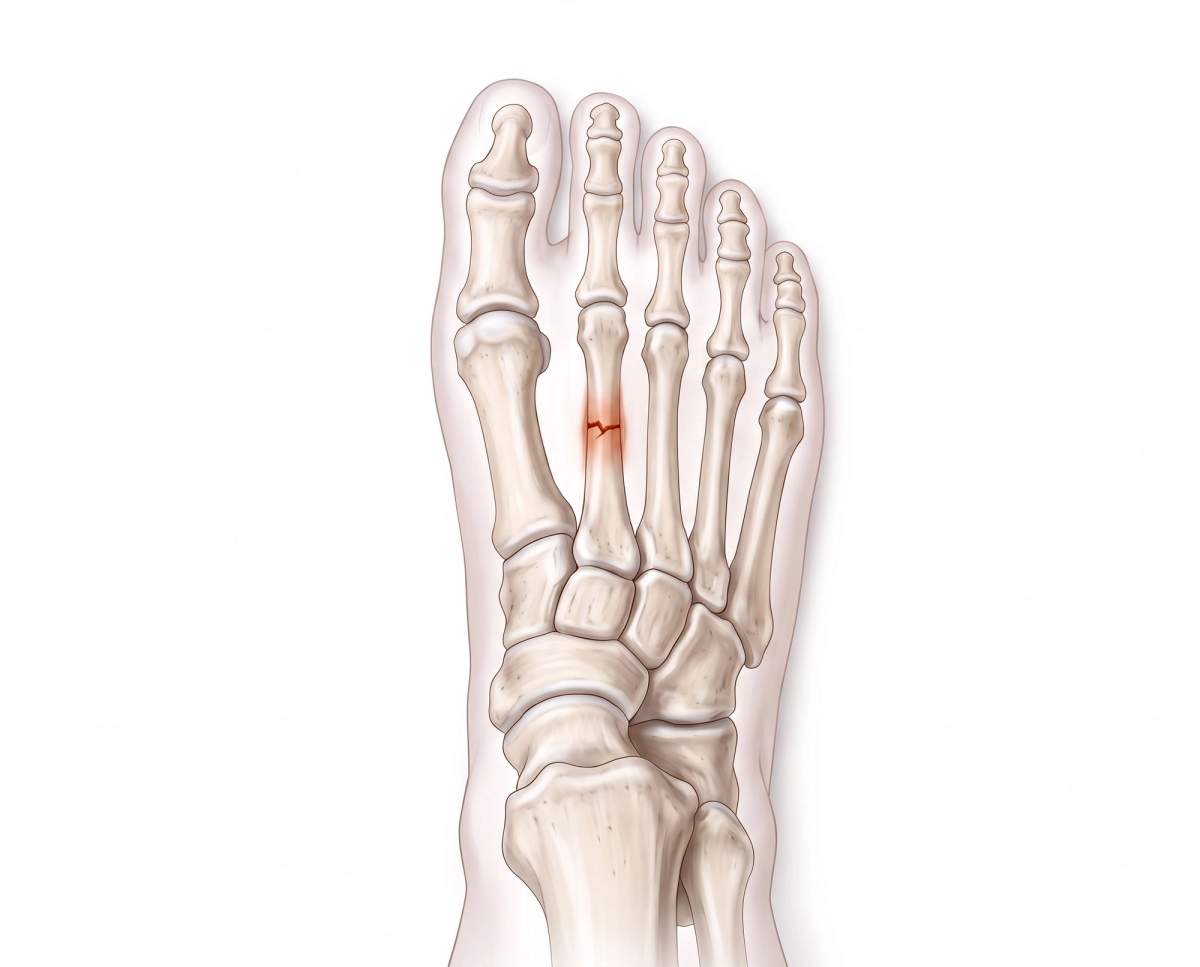
A stress fracture is a small crack in a bone caused by repeated force rather than a single injury. Bone constantly remodels under load. When training increases faster than bone can adapt, it weakens and cracks. Stress fractures are most common in the metatarsals, but can occur in the navicular, heel, and other foot bones.
Symptoms
- Pain that builds during activity and eases with rest
- Pinpoint tenderness over one spot on the bone
- Swelling on the top of the foot
- Pain that eventually occurs even at rest or with walking
Causes and risk factors
- Rapid increases in mileage, intensity, or impact
- New hard surfaces or worn-out shoes
- Low bone density, vitamin D deficiency, or low energy intake
- Foot mechanics such as high arches or bunions
- Prior stress fractures
Diagnosis
Early stress fractures often don't show on X-ray. If the exam suggests one, MRI can confirm it and detect bone stress before a full fracture develops. We also order bloodwork to check bone-health factors when needed.
Treatment
- Protection: a walking boot or stiff-soled shoe, sometimes crutches
- Gradual return: a structured return-to-activity plan once the bone has healed
- Address the cause: training adjustments, footwear, custom orthotics, and bone-health workup
- Surgery: screw fixation for high-risk fractures, such as the navicular or fifth metatarsal (Jones), or fractures that won't heal (Fracture Management)
When to see us
If foot pain gets worse with activity and you can press on one tender spot on the bone, stop running and get evaluated at our Fairfax office. Training through a stress fracture can turn it into a complete break.
Our approach
Dr. Shyaun Rafii's residency included extensive trauma and sports medicine training, and Dr. Andrew Falco focuses on sports-related injuries. We look beyond the fracture to the training, footwear, and bone-health factors behind it.
Frequently asked questions
How long does a stress fracture take to heal?
Most heal in six to eight weeks. High-risk locations can take longer and may need surgery.
Can I cross-train?
Usually, yes. Swimming, cycling, and pool running often keep fitness up without stressing the bone. We'll clear specific activities.
Why did I get a stress fracture?
Usually a combination of training load, footwear, mechanics, and bone health. Finding the cause is key to preventing another.